
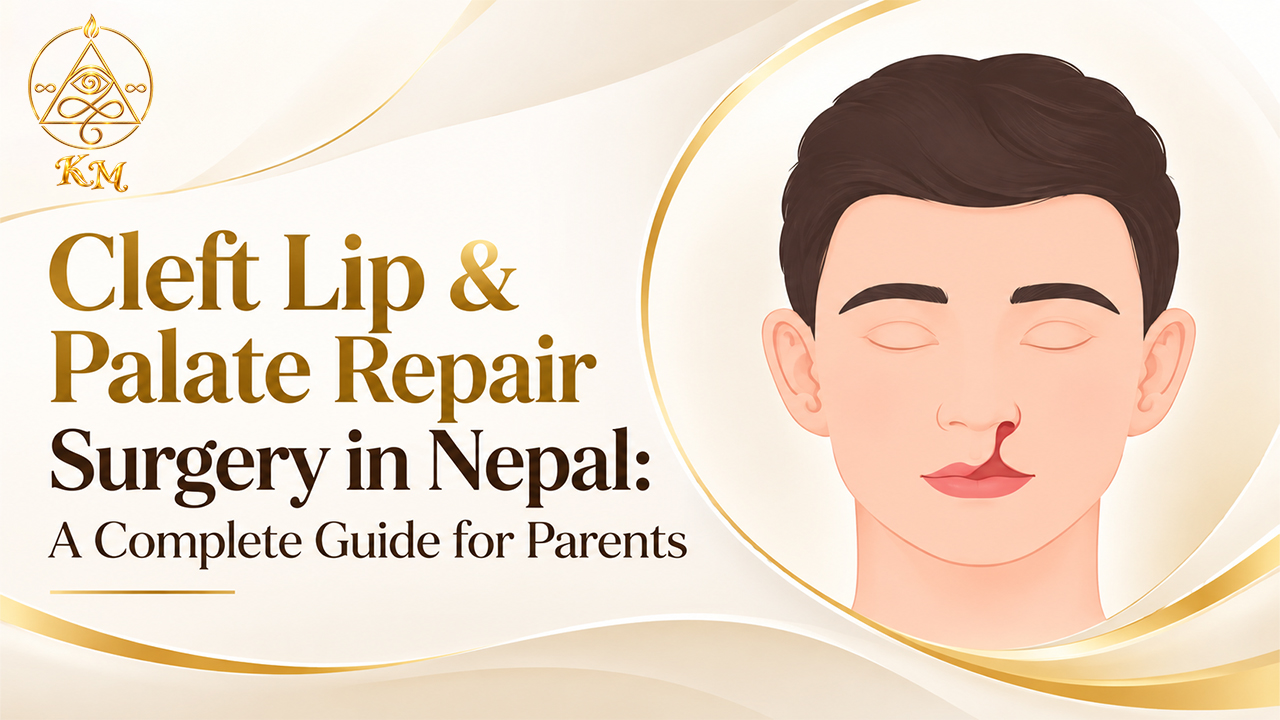

Cleft Lip & Palate Repair Surgery in Nepal: A Complete Guide for Parents
Learning that your baby has a cleft lip or cleft palate can bring many questions. Will your child be able to feed properly? When is surgery needed? Will your child develop clear speech? And where can you find appropriate treatment in Nepal?
The encouraging news is that cleft lip and palate are treatable congenital conditions. Surgery can repair the affected structures, while feeding support, hearing assessments, speech therapy, and dental care help children develop as they grow.
Cleft lip and palate repair surgery in Nepal involves reconstructing the affected lip, palate, or both. Treatment is usually planned in stages, depending on the child's age, anatomy, overall health, and individual needs.
In Kathmandu Valley, specialist assessment and reconstructive surgical services are available, including the cleft lip and palate repair service listed by Dr. Krishna Manandhar.
This guide explains the condition, typical treatment timelines, surgical procedures, preparation, recovery, risks, long-term care, and important questions families should ask before choosing treatment.
What Are Cleft Lip and Cleft Palate?
Cleft lip and cleft palate are congenital differences that develop when parts of a baby's lip or the roof of the mouth do not join completely during early pregnancy.
Although the conditions are often mentioned together, they affect different structures and can occur separately.
Cleft Lip
A cleft lip is an opening or separation in the upper lip. It can be a small notch or a wider gap extending toward the nose.
There are two common presentations:
Unilateral cleft lip: The opening is on one side of the upper lip.
Bilateral cleft lip: Openings are present on both sides.
A cleft lip may affect the skin, underlying muscle, and shape of the nose. Some children also have a cleft involving the gum ridge or palate.
Cleft Palate
A cleft palate occurs when the roof of the mouth does not close completely during development.
The palate consists of two main regions:
Hard palate: The bony front portion of the roof of the mouth.
Soft palate: The muscular back portion that contributes to swallowing and speech.
A cleft may involve one or both regions. The opening can create a connection between the mouth and nasal cavity, affecting feeding and the development of normal speech patterns.
Some children have both a cleft lip and cleft palate, while others have only one of these conditions.
According to the Centers for Disease Control and Prevention, the treatment needs of children vary according to the cleft's type and severity, age, and any associated medical conditions.
What Causes Cleft Lip and Palate?
Cleft lip and palate develop during early fetal growth.
In many children, there is no single identifiable cause. The conditions are generally understood to involve a combination of genetic and environmental influences.
Certain risk factors have been associated with an increased likelihood of cleft conditions, including maternal smoking, pre-existing diabetes, and exposure to some medications during pregnancy.
However, a risk factor does not mean that it caused a particular child's cleft.
Families should not assume that a cleft developed because of something they did or failed to do. A specialist assessment can help identify whether there are other associated medical or genetic conditions.
Cleft lip may be noticed during a prenatal ultrasound. A cleft palate, particularly when it occurs without a cleft lip, may be identified only after birth. Some less obvious palate differences are diagnosed later when feeding or speech concerns become apparent.
Why Is Early Assessment Important?
Early assessment is important because cleft conditions can affect more than facial appearance.
The main areas of concern may include feeding, nutrition, breathing, hearing, speech, and dental development.
Feeding and Nutrition
Babies with a cleft palate may have difficulty creating the suction required for breastfeeding or conventional bottle feeding.
Milk may pass through the nose, feeding sessions may take longer, and some infants may struggle to gain weight.
A baby with an isolated cleft lip may be able to breastfeed effectively, while a baby with a cleft palate may require modified positioning or a specialized feeding bottle.
Families should seek guidance from a paediatrician or appropriately trained feeding specialist rather than waiting for surgery to address feeding difficulties.
Expressed breast milk can often be used when direct breastfeeding is difficult.
The NHS guidance on cleft treatment describes individualized feeding support and specialized bottles as important options.
Hearing and Ear Health
Children with a cleft palate have an increased risk of middle-ear fluid accumulation, sometimes called glue ear.
This can affect hearing and may contribute to speech and language difficulties.
Hearing assessments and ear, nose, and throat evaluations are therefore important parts of long-term care.
Speech Development
The soft palate helps control airflow between the mouth and nose during speech.
When the palate does not function adequately, some speech sounds may be difficult to produce, and speech may sound unusually nasal.
Palate surgery can improve the structural conditions needed for speech development, but some children will still require speech-language therapy or additional treatment.
Breathing and Other Medical Conditions
Some children with cleft conditions have other anatomical differences or medical conditions that can affect breathing and feeding.
Any newborn experiencing significant breathing difficulty, repeated choking, or inability to feed safely requires prompt medical assessment.
When Should Cleft Lip and Palate Surgery Be Performed?
There is no single surgical timeline that is appropriate for every child.
The timing depends on the cleft type, the child's health, growth, feeding status, airway considerations, and the clinical team's recommendations.
The CDC recommends cleft lip repair during the first 12 months of life and cleft palate repair within the first 18 months when feasible.
The NHS describes lip repair commonly occurring around 3–6 months and palate repair around 6–12 months. Individual surgical programs may use different timing within an appropriate clinical plan.
Typical Treatment Timeline
| Age or stage | Possible assessment or treatment |
|---|---|
| Birth and early infancy | Paediatric examination, feeding support, growth monitoring and hearing assessment |
| Around 3–6 months | Cleft lip repair, when clinically appropriate |
| Often around 6–12 months | Cleft palate repair; timing can vary |
| Early childhood | Speech, hearing, dental and developmental monitoring |
| School-age years | Orthodontic treatment or alveolar bone grafting when indicated |
| Adolescence and adulthood | Additional functional or aesthetic procedures when needed |
This table is a general educational guide, not an individual surgical schedule.
Children who have passed the commonly recommended ages can still benefit from evaluation. Families should not assume that the opportunity for treatment has been lost.
A specialist can recommend the most appropriate next steps based on the child's present condition.
Types of Cleft Lip and Palate Repair Surgery
Cleft treatment belongs to the broader field of reconstructive surgery, which aims to restore anatomy, function, or both.
The major procedures are cleft lip repair, cleft palate repair, and selected additional procedures.
1. Cleft Lip Repair Surgery
Cleft lip repair, also called cheiloplasty, reconstructs the separated tissue and muscle of the upper lip.
The surgeon carefully repositions and joins the tissues to improve the continuity and function of the lip.
Depending on the anatomy, the procedure may also address aspects of nasal shape.
The objectives typically include improving lip structure, muscle continuity, and facial appearance.
Different surgical approaches, including rotation-advancement or triangular-flap techniques, may be considered. The appropriate technique depends on the individual cleft.
A scar remains after surgery, although its appearance often changes as healing progresses.
2. Cleft Palate Repair Surgery
Cleft palate repair, or palatoplasty, involves closing the opening in the roof of the mouth and reconstructing relevant palatal tissues and muscles.
The procedure aims to separate the oral and nasal cavities and support the functions required for swallowing and speech.
Surgery is performed under general anaesthesia in an appropriately equipped facility.
Palate repair techniques vary. A surgeon may consider approaches that reconstruct the soft-palate muscles, including selected forms of palatoplasty.
No technique should be described as universally superior for every child.
The patient's anatomy, surgical objectives, available expertise, and expected functional outcomes influence the choice.
3. Additional Cleft-Related Surgery
Some children require further procedures as they grow.
These may include:
Alveolar bone grafting to address a cleft in the gum ridge.
Secondary palate procedures for persistent speech-related functional problems.
Lip revision when a significant residual functional or anatomical concern remains.
Nasal reconstruction to address breathing or structural concerns.
Selected jaw-related procedures when growth and bite problems require specialist treatment.
Not every child needs these operations.
Long-term follow-up helps determine whether additional intervention would provide a meaningful benefit.
How Is a Child Evaluated Before Surgery?
A complete assessment is essential before planning cleft surgery.
Families should expect the surgical team to evaluate the child's medical condition rather than recommend an operation based only on photographs or age.
Medical and Surgical Assessment
The treating team may examine the cleft anatomy, weight and growth, feeding history, breathing, previous medical problems, and any associated conditions.
Relevant investigations and specialist consultations are selected according to the child's clinical needs.
Anaesthesia Assessment
Cleft lip and palate procedures generally require general anaesthesia.
The anaesthesia team evaluates factors such as airway anatomy, general health, associated conditions, and the planned procedure.
Parents should be informed about the anaesthetic plan, expected monitoring, and important risks.
Nutritional Preparation
Adequate feeding and growth are important considerations in surgical planning.
If an infant is not gaining weight appropriately, the clinical team may recommend feeding support or treatment of associated health problems before an elective procedure.
This does not mean every child must reach the same weight or age before surgery.
Planning for Follow-Up
Parents should understand the expected follow-up schedule before surgery.
Important topics include wound care, feeding instructions, medication, emergency contact details, and how speech and hearing will be monitored.
Families traveling from outside Kathmandu Valley should discuss return visits, accommodation needs, and access to urgent care near home.
What Happens During Cleft Repair Surgery?
The exact steps depend on whether the child is having lip repair, palate repair, or another procedure.
The general care process usually involves:
Before surgery: The child undergoes a final medical and anaesthesia evaluation. Parents receive instructions about fasting, admission, consent, and any medications.
During surgery: The child receives general anaesthesia while the surgical team repairs the affected anatomy. The anaesthesia team monitors the child's breathing and other vital functions.
Immediately after surgery: The child is monitored in a recovery area. Staff assess breathing, comfort, bleeding, and readiness to begin feeding according to the postoperative plan.
Before discharge: Parents receive specific instructions on feeding, medication, incision or mouth care, activity restrictions, and follow-up.
The length of the operation and hospital stay varies.
Families should ask the treating hospital for an estimate specific to their child's planned procedure rather than relying on a universal duration.
Recovery After Cleft Lip and Palate Surgery
Recovery is an important part of treatment, particularly for infants and young children.
Some swelling, discomfort, and temporary feeding difficulties may occur after surgery.
The recovery period and postoperative restrictions differ between lip and palate procedures.
Feeding After Surgery
The team will explain when and how feeding can resume.
Certain procedures may require temporary adjustments to bottles, feeding utensils, food texture, or feeding technique.
Instructions can differ between hospitals and surgical methods. Parents should follow their child's own care plan rather than applying generic feeding restrictions from another patient's experience.
Maintaining adequate hydration is especially important.
Caring for the Surgical Area
After lip repair, the surgical incision may show swelling or redness during early healing.
Parents may be instructed on gentle cleaning and methods to prevent accidental injury.
After palate repair, the healing area is inside the mouth, so specific feeding and mouth-care precautions may be necessary.
Do not apply ointments, massage the scar, or introduce devices without the treating team's approval.
Pain Management
The clinical team may prescribe appropriate pain medication and explain how to administer it safely.
Parents should follow the written dose and schedule rather than using adult medications or estimating doses.
When Should Parents Seek Urgent Help?
Seek emergency care immediately if the child has serious breathing difficulty, uncontrolled bleeding, becomes unusually difficult to awaken, or appears severely unwell.
Contact the surgical team promptly if the child develops:
Persistent difficulty drinking or feeding.
Signs of dehydration, including markedly fewer wet diapers.
Increasing swelling, spreading redness, or unusual discharge.
Fever according to the team's postoperative warning criteria.
Wound separation or a new opening.
Pain that is not controlled by prescribed treatment.
Postoperative guidance from Nationwide Children's Hospital discusses feeding, incision care, hydration, and warning signs.
Written instructions from the treating team must always take priority for the individual child.
What Are the Risks of Cleft Lip and Palate Repair?
Cleft surgery can provide important functional and anatomical benefits, but every operation carries risks.
Parents should receive an individualized explanation of potential complications before giving consent.
Possible complications include bleeding, infection, wound separation, scarring, and complications associated with general anaesthesia.
After palate repair, a persistent or newly formed opening between the mouth and nose, called an oronasal fistula, may occur.
Some children continue to experience speech difficulties because the repaired palate does not close adequately during speech. This is sometimes described as velopharyngeal dysfunction.
Additional therapy or surgery may be considered after specialist assessment.
Hearing difficulties, dental concerns, facial growth differences, and other developmental issues may also require attention over time.
Surgery cannot guarantee completely normal speech, feeding, appearance, or freedom from additional treatment.
The most appropriate treatment plan balances the expected benefits with individual risks and the child's long-term needs.
Long-Term Care After Cleft Repair
Successful cleft care is not limited to closing a visible gap.
A child may need periodic assessments throughout childhood and sometimes into adulthood.
The American Cleft Palate Craniofacial Association emphasizes coordinated care because cleft conditions can affect several aspects of health and development.
Speech and Language Care
Children with a repaired cleft palate may need repeated speech assessments.
Speech-language therapy can help children develop appropriate speech patterns.
Where structural problems contribute to persistent speech difficulties, the team may recommend further evaluation rather than relying on exercises alone.
Hearing Assessments
Children with cleft palate can experience middle-ear problems that affect hearing.
Hearing tests and ENT evaluations may be necessary even after the palate has been repaired.
Dental and Orthodontic Treatment
A cleft involving the gum ridge may affect tooth position, eruption, and bite development.
Dental monitoring, orthodontic care, or bone grafting may be recommended at appropriate stages.
Emotional and Social Well-Being
Children and families may also benefit from age-appropriate emotional support.
Concerns about appearance, speech, social confidence, or repeated treatment deserve attention alongside physical health.
Care should support the child's development and well-being without suggesting that facial differences determine their value or future opportunities.
How to Choose Cleft Surgery Care in Nepal
Choosing a provider is an important decision for parents.
A surgeon's general experience in plastic surgery matters, but it is also important to understand their specific training and experience with the procedure being considered.
Families should evaluate the complete treatment pathway, including the surgical facility and access to ongoing care.
Questions to Ask Before Choosing a Provider
What relevant qualifications and experience does the surgeon have with this type of cleft?
Where will surgery be performed, and what paediatric anaesthesia and postoperative facilities are available?
Which specialists will assess feeding, hearing, speech, dental development, and other needs?
Why is the proposed surgical timing appropriate for this child?
What are the main risks and possible limitations?
What happens if complications occur or additional treatment is needed?
How will follow-up be coordinated if the family lives outside Kathmandu Valley?
The answers should be specific to the child and understandable to the family.
For broader information about qualifications and specialist practice, readers can also review the website's guide to choosing a plastic surgeon in Nepal.
How Much Does Cleft Lip and Palate Surgery Cost in Nepal?
There is no single reliable fee applicable to every cleft lip or palate operation in Nepal.
The total cost may depend on the procedure, surgical complexity, hospital, anaesthesia, investigations, admission, medication, and postoperative care.
When comparing quotations, families should ask whether the estimate includes the complete treatment episode.
A lower initial surgical quotation may not include subsequent follow-up, investigations, or related services.
Are Free or Supported Cleft Surgeries Available?
Some organizations and hospitals support access to cleft treatment.
For example, B&B Hospital's Department of Cleft and Craniomaxillofacial Surgery describes a partnership with Smile Train that provides free cleft operations through its program.
Families should contact the hospital directly to verify current availability, eligibility requirements, the department responsible, and which services are covered.
This information does not establish that every cleft procedure, surgeon, consultation, or related expense is free.
Parents should avoid delaying an important medical assessment while waiting for an unconfirmed funding arrangement.
Cleft Lip and Palate Repair Consultation in Kathmandu
Dr. Krishna Manandhar's official website lists cleft lip and palate repair among his reconstructive surgery services in Nepal.
The website also describes his qualifications in general surgery and plastic and reconstructive surgery, along with practice arrangements in Kathmandu Valley.
A consultation is intended to assess the condition and discuss whether surgery is appropriate, the potential treatment plan, and the need for additional specialist involvement.
Families considering treatment can review the Cleft Lip & Palate Repair service page or visit the official website to request an appointment.
Before visiting, confirm the current consultation location, availability, paediatric care arrangements, and what medical records to bring.
Final Thoughts
Cleft lip and palate are treatable congenital conditions, but the needs of each child are different.
Surgical repair can help restore important anatomical functions, while appropriate feeding support, hearing care, speech therapy, dental treatment, and regular follow-up support long-term development.
The key is an individualized plan developed by clinicians with relevant cleft-care expertise.
For families in Nepal, the best next step is to arrange an appropriate clinical assessment, understand the proposed treatment stages, and ask clear questions about safety, recovery, costs, and ongoing care.
To learn more about available reconstructive services, visit Dr. Krishna Manandhar's cleft lip and palate repair page.
FAQs
1. Can cleft lip and palate be repaired in older children or adults?
Yes. Older children and adults who have not received surgery, or who experience persistent functional problems after earlier repair, can be assessed for treatment. The proposed operation and expected outcomes depend on anatomy, previous surgery, growth and current concerns.
2. Is cleft lip surgery the same as cosmetic lip surgery?
No. Cleft lip repair is primarily reconstructive surgery that addresses congenital anatomical differences involving the lip and sometimes the nose. Although appearance matters, restoring appropriate structure and function is central to treatment.
3. Can a child develop speech problems even after successful palate surgery?
Yes. Some children continue to experience articulation difficulties or abnormal nasal airflow after repair. Specialist speech assessment helps determine whether therapy, additional investigation or further surgical treatment is appropriate.
4. Can cleft lip and palate affect other family members?
Most cases have a combination of genetic and other influences. Some families have an increased chance of recurrence, particularly when there is a relevant family history or genetic condition. Genetic counselling may be useful when recommended by the clinical team.
5. Should parents wait until their child is older before seeking a consultation?
No. Families can seek assessment during infancy, including before the child is ready for surgery. Early feeding, growth, breathing and hearing concerns can require attention long before the operation itself.