


Rhinoplasty recovery happens in stages. Most people go through the most visible swelling, bruising, congestion and activity restrictions during the first one to two weeks, but that does not mean the nose has completely healed. Deeper swelling especially around the nasal tip can continue to improve for several months, and the final contour may take around a year to become apparent.
The American Society of Plastic Surgeons notes that initial swelling generally improves within a few weeks while the new nasal contour may continue refining for up to a year. American Society of Plastic Surgeons rhinoplasty recovery guidance
Your exact nose surgery recovery time depends on what was changed during surgery, whether bone or cartilage was reshaped, your skin and tissue characteristics, whether the procedure was primary or revision rhinoplasty, your general health and how your individual body heals.
For information about the procedure itself before focusing on recovery, you can visit to the article rhinoplasty in Nepal: what to know before surgery.
Important: This timeline is general educational information. Your operating surgeon's postoperative instructions take priority because different rhinoplasty procedures require different precautions.
Rhinoplasty Recovery Timeline at a Glance
| Stage | What you may notice | Typical activity |
|---|---|---|
| First 24–72 hours | Swelling, congestion, pressure, bruising beginning, mild drainage | Rest, short walks, head elevated |
| Days 4–7 | Swelling and bruising remain visible; nasal splint commonly still present | Light daily activity |
| Week 2 | Bruising and facial swelling usually improving | Many people return to desk work or school |
| Weeks 3–4 | Appearance becomes more socially comfortable; nasal swelling remains | Gradual increase in normal activity if cleared |
| Weeks 4–6 | More nasal definition appears | Exercise may gradually resume with surgeon approval |
| Months 2–3 | Most obvious swelling has substantially reduced for many patients | Normal routines usually easier |
| Months 3–6 | Slow refinement continues, particularly at the tip | Protect the nose from trauma |
| Months 6–12+ | Subtle swelling continues resolving | Final result becomes progressively clearer |
These are broad ranges rather than deadlines. Cleveland Clinic notes that people may return to work or school within roughly one to two weeks, while subtle swelling can persist for much longer. Cleveland Clinic guidance on rhinoplasty recovery
First 24 to 72 Hours: Rest, Swelling and Nasal Congestion
The first few days are generally the most restrictive part of Rhinoplasty Recovery.
Your nose may feel blocked because of internal swelling, dried blood, dressings or internal splints. Some blood-tinged drainage may occur. Bruising can develop around the eyes and upper cheeks, particularly when the nasal bones have been treated.
Keeping the head elevated while resting is commonly recommended to help limit swelling. Mayo Clinic advises patients to rest with the head above the chest after rhinoplasty and describes a period of congestion, mild drainage and swelling during early healing. Mayo Clinic rhinoplasty aftercare guidance
Do not judge the appearance of your nose at this point. Early rhinoplasty swelling can temporarily make the nose look wider, uneven or more upturned than expected.
What should you do during the first few days?
Follow the medication and wound-care instructions given by your surgeon. Rest, but take short gentle walks unless you have been advised otherwise. Avoid bending, heavy lifting and strenuous activity.
Do not remove dressings, tape, stitches or a nasal splint yourself unless specifically instructed.
Your surgeon may also give instructions about saline spray, wound cleaning or other postoperative care. These protocols vary, so use the instructions provided by the surgical team rather than copying someone else's recovery routine.
Days 4–7: The Splint Is Still Protecting the Nose
By the end of the first week, discomfort often begins improving even though the nose can still look noticeably swollen.
An external splint is commonly kept in place for about a week. Mayo Clinic describes internal bandages as potentially remaining for one to seven days and an external splint commonly remaining for around one week.
The exact timing depends on what was done during surgery.
Do not loosen the splint because it feels uncomfortable or because swelling seems to be changing underneath it. It is designed to support the nose during an early stage of healing.
At this stage, the major priorities remain:
protecting the nose from impact
keeping dressings clean and dry as directed
avoiding nose blowing unless your surgeon has specifically cleared it
sleeping in the recommended position
avoiding heavy physical exertion.
Bruising around the eyes may still be obvious. That does not necessarily mean recovery is abnormal.
Week 2: Bruising Usually Starts Becoming Less Noticeable
For many patients, the second week marks an important transition.
The splint and any non-dissolvable external sutures may already have been removed at a follow-up visit. Much of the obvious bruising around the eyes often begins fading, although some discolouration or puffiness may remain.
The NHS notes that patients may need up to two weeks away from work and that bruising, swelling and redness can substantially fade over the following weeks. NHS rhinoplasty recovery information
Returning to work depends on more than appearance. Someone working at a computer may return sooner than a person whose job involves heavy lifting, dust, outdoor physical work or a risk of facial impact.
This is also why a single answer to “How long is nose surgery recovery time?” can be misleading. Returning to an office is not the same as returning to unrestricted physical activity, and neither means that nasal healing is complete.
Weeks 3–4: You May Look More Like Yourself, but Healing Continues
During weeks three and four, visible facial swelling often becomes much less distracting.
Your nose will still be swollen. You may notice that one side looks slightly different from the other or that the nasal tip looks fuller than expected. Swelling does not always disappear symmetrically or in a straight line.
The shape you see at three or four weeks should therefore not be treated as the final surgical result.
You may feel ready for a much wider range of daily activities, but your surgeon may still limit strenuous exercise, heavy lifting or activities that substantially increase blood pressure.
Weeks 4–6: Gradual Return to Exercise
One of the most common questions is when exercise after rhinoplasty can restart.
There is no universal date because the answer depends on the operation and the activity.
Cleveland Clinic advises that light exercise may commonly restart within roughly four to six weeks, with heavy lifting restricted during a similar period. Other institutions use different timelines depending on the operation.
That variation is why your own surgeon's clearance matters more than an internet timetable.
A gradual progression may involve walking first, then low-impact exercise, then more demanding cardiovascular activity, resistance training and eventually activities with greater risk of facial impact.
Contact sports deserve particular caution because an accidental blow to a recently operated nose can affect healing.
Months 2–3: The Nose Becomes More Defined
By two to three months, much of the obvious swelling has generally settled for many patients.
You may start seeing better definition along the bridge and nasal sidewalls. However, the tip can still look fuller or feel firm.
This is a normal reason why surgeons generally do not assess a rhinoplasty purely by how it looks during the early postoperative weeks.
Cleveland Clinic describes swelling as gradually decreasing over the first several months, with complete recovery potentially taking up to a year.
Your nose can also look slightly different from one morning to the next. ASPS specifically notes that swelling can fluctuate and may be more noticeable in the morning during the recovery period.
Months 3–6: Subtle Refinement Continues
At this stage, most people are no longer dealing with the obvious appearance of recent surgery.
Instead, the changes become slower and more subtle.
The nasal tip may gradually become better defined. Areas that previously felt firm may begin softening. Small differences related to swelling can continue changing.
Patients sometimes become concerned when progress feels slower during these months. Early swelling can disappear quickly; late swelling often resolves much more gradually.
That does not mean every asymmetry should automatically be ignored. Any persistent concern should be discussed during follow-up rather than diagnosed from photographs or online comparisons.
Months 6–12 and Beyond: Approaching the Final Result
The final phase of Rhinoplasty Recovery is mostly refinement rather than dramatic healing.
ASPS states that although initial swelling improves in weeks, it may take up to a year for the new contour to fully refine.
A 2026 University of Utah recovery discussion similarly emphasizes that the small amount of swelling remaining after the first several weeks may take many months to disappear. University of Utah rhinoplasty recovery timeline
Some people particularly those undergoing more extensive procedures may require longer before the final appearance is judged.
Why Does Rhinoplasty Swelling Last So Long?
Swelling is part of the body's response to surgery.
During rhinoplasty, skin and soft tissue may be lifted from the underlying framework, while cartilage and sometimes nasal bones are reshaped. The tissues need time to recover and adapt around the modified structure.
Early swelling is relatively obvious. Late swelling can be subtle and may be concentrated around the tip.
Several factors can influence the apparent recovery period, including:
the extent of surgery
whether nasal bones were repositioned
whether cartilage grafting was required
open versus closed surgical approach
skin and soft-tissue characteristics
whether the operation was primary or revision rhinoplasty
smoking or nicotine exposure
accidental trauma during healing
individual biological variation.
This is why comparing your nose day by day with another patient's photographs is rarely useful.
How Should You Sleep After Rhinoplasty?
Head elevation is commonly advised during early recovery because it can help limit swelling.
Your surgeon may ask you to sleep on your back with your head elevated for an initial period. The exact duration varies.
Avoid sleeping in a position where the nose could be pressed into a pillow until your surgeon confirms it is safe.
Can You Blow Your Nose After Rhinoplasty?
Usually not during the early recovery period unless your surgeon specifically tells you otherwise.
Pressure from forceful nose blowing can irritate newly operated tissues. Stanford Health Care, for example, advises patients undergoing nasal surgery to dab gently rather than blow the nose during early healing. Stanford Health Care nasal postoperative instructions
If you need to sneeze, many postoperative instructions recommend doing so with the mouth open to reduce pressure through the nasal passages.
Follow your own surgeon's instructions about saline rinses or sprays because the appropriate protocol depends on the procedure.
When Can You Wear Glasses?
Eyeglasses and sunglasses can put pressure on the nasal bridge.
Mayo Clinic advises avoiding resting glasses directly on the nose for at least four weeks after rhinoplasty and describes alternatives such as cheek supports or taping glasses away from the bridge during healing.
Your restriction may be longer if the nasal bones were repositioned, so confirm this during follow-up.
Postoperative Care: What Usually Helps Recovery?
Good postoperative care is mainly about protecting healing structures rather than trying to “speed up” recovery.
Follow the prescribed medication plan, attend scheduled reviews, protect the nose from impact, avoid activities that have not yet been cleared, and follow your surgeon's wound- and splint-care instructions.
Smoking and nicotine can interfere with wound healing, so discuss nicotine use with your surgical team before and after surgery.
Avoid taking medications or supplements specifically to reduce swelling unless your surgeon has approved them. “Natural” products can still affect bleeding or interact with medications.
Rhinoplasty Recovery in Nepal: What Should You Plan For?
The biological process of healing does not fundamentally change because surgery takes place in Kathmandu, but local logistics can affect how easy recovery is to manage.
People searching for “rhinoplasty recovery Nepal” should consider where they will stay during the first postoperative days, how easily they can attend the first follow-up visit, who will help them immediately after surgery, and whether they plan to travel away from their surgeon soon afterward.
If you live outside Kathmandu, discuss your follow-up schedule before surgery rather than assuming that every review can be conducted remotely.
You can learn more about the practice's verified rhinoplasty procedure and recovery information.
Readers comparing procedures can also review the site's guide to rhinoplasty cost in Nepal. Cost and recovery should be considered separately: a quotation does not tell you how quickly your individual tissues will heal.
If you are comparing providers for plastic surgery in Nepal, consider qualifications, procedure-specific experience, realistic treatment planning, operating-facility standards and availability of postoperative follow-up. The site's guide to choosing a plastic surgeon in Nepal provides further context.
What Is Normal After Rhinoplasty and When Should You Call the Surgeon?
Some swelling, stuffiness, bruising and mild drainage can be expected early after surgery.
However, worsening symptoms deserve attention.
Contact your surgical team promptly if you experience significant or persistent bleeding, increasing rather than improving pain, fever, concerning wound discharge, increasing redness, a substantial accidental blow to the nose, or unexpected breathing difficulty.
Your surgeon may give you additional warning signs based on your procedure and medical history. Keep those instructions accessible during the first postoperative days.
If you have severe breathing difficulty or another medical emergency, seek urgent medical care rather than waiting for a routine follow-up.
When Will You See the Final Rhinoplasty Result?
You will usually see changes long before healing is complete.
When the splint comes off, the nose may already look different, but swelling can obscure fine detail. Over the following weeks and months, definition gradually improves.
Final refinement may take around a year and sometimes longer depending on the individual operation and healing pattern.
The key distinction is:
Social recovery may take weeks. Structural healing takes longer. Final refinement can take many months.
Understanding those separate timelines can prevent unnecessary concern during normal healing.
Frequently Asked Questions
How long does rhinoplasty recovery take?
Many people can return to desk-based work or school within approximately one to two weeks, but the nose continues healing for months. Subtle swelling and final refinement can take around a year.
How long does bruising last after rhinoplasty?
Bruising commonly improves substantially during the first one to three weeks, although individual recovery varies. The NHS notes that bruising, swelling and redness may have faded considerably by around three weeks.
When is the nasal splint removed?
An external nasal splint commonly remains in place for approximately one week, but your surgeon determines the exact removal date.
When can I exercise after rhinoplasty?
Light activity usually comes before strenuous exercise. Some medical guidance places gradual light exercise around the four-to-six-week period, but your operation may require different restrictions. Obtain clearance from your surgeon before progressing.
Why does my nose still look swollen after one month?
Because nasal tissues continue healing well beyond the first few weeks. Visible swelling can improve considerably while a smaller amount remains, particularly around the nasal tip.
Can swelling look uneven?
Yes. Uneven postoperative swelling can occur, particularly early in recovery. However, persistent or suddenly worsening one-sided changes should be discussed with your surgeon rather than assumed to be normal.
Planning Your Rhinoplasty and Recovery
Good rhinoplasty planning includes more than choosing the day of surgery. It also means allowing enough time for visible recovery, arranging help during the early postoperative period, protecting the nose while it heals, attending follow-up appointments and understanding that the final shape develops gradually.
If you are considering rhinoplasty in Kathmandu or elsewhere in Nepal, a consultation can clarify the procedure that may be appropriate for your anatomy as well as the recovery restrictions likely to apply to your individual surgical plan.
Individual suitability, recovery and results vary. This article provides general educational information and is not a substitute for examination, diagnosis or individualized postoperative advice from your surgeon.
About Dr. Krishna Manandhar
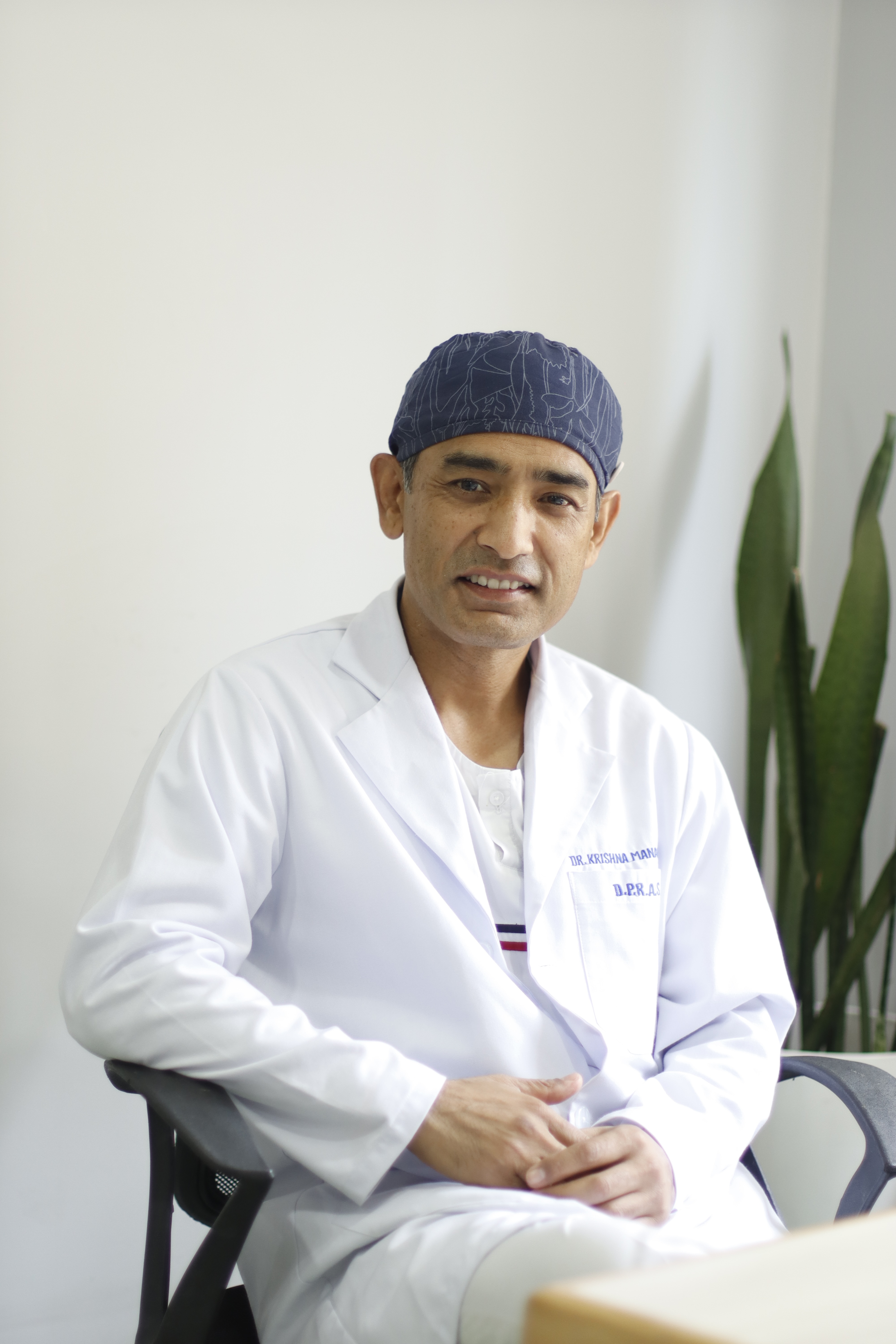
Dr. Krishna Manandhar is a Plastic, Reconstructive and Aesthetic Surgeon in Nepal and serves as Chief of the Department of Plastic, Reconstructive and Aesthetic Surgery at B&B Hospital. He holds MD, MS and MCh qualifications and is registered with the Nepal Medical Council under NMC No. 3907. His professional work includes plastic, reconstructive and aesthetic surgery, including procedures such as rhinoplasty.
Learn more about Dr. Krishna Manandhar and his plastic surgery services.